
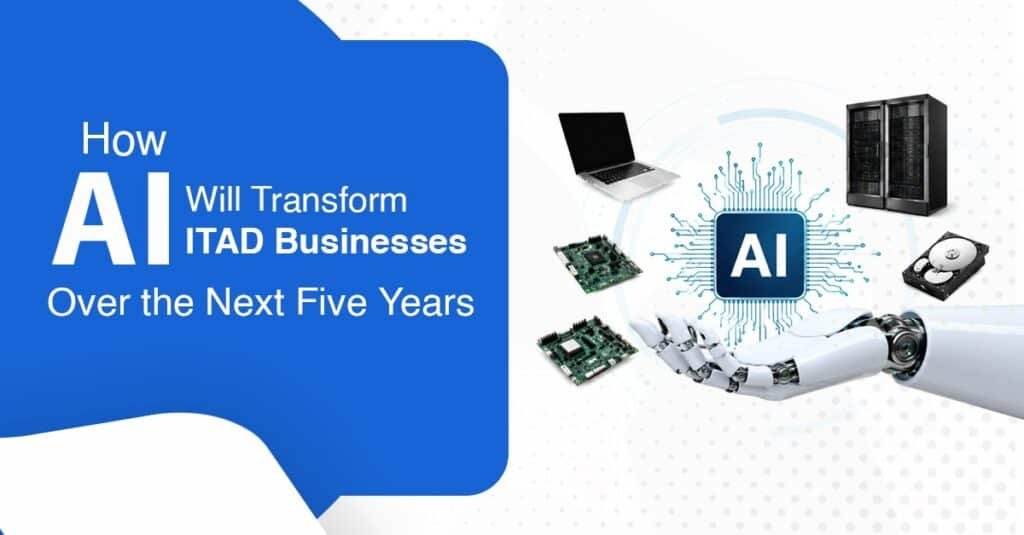
For decades, the IT Asset Disposition (ITAD) industry has been built on operational excellence.
Providers invested in secure logistics, certified data destruction, compliant recycling, asset recovery, remarketing and environmental responsibility to meet the growing demands of enterprise organisations. These capabilities became the foundation of trust, helping businesses demonstrate compliance while protecting customers from data security and regulatory risks.
But the market has changed.
Today, enterprise buyers assume these capabilities already exist. Secure data destruction, WEEE compliance, asset reporting, chain of custody documentation and reverse logistics are no longer viewed as competitive advantages. They are considered the minimum standard expected from any credible ITAD provider.
That shift is creating a new challenge.
If operational capability is no longer enough to differentiate your business, what will?
The answer lies in how efficiently your organisation operates, how intelligently it uses data and how effectively it communicates its value to enterprise buyers.
Enterprise Buying Has Changed
One of the biggest changes affecting the ITAD industry has little to do with technology itself.
It is the way enterprise organisations buy.
The buying journey rarely begins with a conversation. Long before procurement teams request proposals or schedule meetings, they are already researching potential partners. They evaluate websites, review certifications, compare service capabilities, assess customer credibility and look for evidence that a provider can support complex operational requirements.
This means your business is often being evaluated before your sales team even knows an opportunity exists.
At the same time, enterprise expectations continue to rise.
Customers increasingly expect real-time reporting, faster turnaround times, complete asset visibility, detailed audit trails and sustainability data that supports their own environmental commitments. They are comparing every supplier against the digital experiences they receive from logistics providers, cloud platforms and enterprise software vendors.
In other words, ITAD businesses are no longer competing solely against other ITAD providers. They are competing against a broader standard of operational transparency and customer experience.
Why This Matters More Than Ever
Margins across the industry continue to face pressure.
Labour costs are rising. Compliance requirements continue to evolve. Customers expect more reporting without expecting significantly higher prices. At the same time, competition has increased as more providers offer similar core services.
For many businesses, improving profitability is no longer about processing more assets. It is about removing operational friction.
Every manual spreadsheet, duplicated task, delayed report and disconnected system adds unnecessary cost while slowing down customer service.
The businesses that thrive over the next five years are unlikely to be those with the largest facilities or the biggest teams.
They will be the organisations that make better decisions, respond faster and use technology to improve both operational performance and customer experience.
AI Is Not the Story. Business Transformation Is.
Artificial Intelligence has become one of the most talked-about technologies across every industry.
Yet many discussions focus on the technology itself rather than the business outcomes it can deliver.
For ITAD businesses, AI should not be viewed as a replacement for experienced engineers, compliance specialists or operations teams. Those professionals remain critical to ensuring secure data destruction, regulatory compliance and high-quality customer service.
The real opportunity lies elsewhere.
AI has the potential to remove repetitive manual work, improve operational visibility, support faster decision-making and enable teams to focus on higher-value activities that strengthen customer relationships and commercial growth.
In other words, AI is not replacing expertise. It is amplifying it.
That distinction is important because the businesses that gain the greatest value from AI will not necessarily be those investing in the most advanced technology. They will be the organisations that understand where technology can improve efficiency, strengthen decision-making and create a better experience for their customers.
Where AI Will Create the Biggest Impact Across ITAD Businesses
Artificial Intelligence is often associated with chatbots and content generation, but its greatest impact on the ITAD industry will be far less visible.
The real value of AI lies in helping businesses make faster, better-informed decisions while reducing the manual effort that slows operations and affects profitability.
ITAD providers generate vast amounts of operational data every day, from asset inventories and collection schedules to erasure certificates, resale values, logistics records and customer reports. Much of this information already exists within ERP systems, spreadsheets and operational platforms. The challenge is not collecting data. It is using it effectively.
Businesses that transform this data into actionable intelligence will be better positioned to improve efficiency, strengthen customer relationships and compete for larger enterprise opportunities.
1. Smarter Asset Intelligence
Every incoming asset presents a series of decisions.
- Should it be refurbished?
- Should it be remarketed?
- Should it be harvested for parts?
- Should it be recycled?
Today, many of these decisions rely on experience, manual assessment and historical knowledge.
AI has the potential to analyse equipment specifications, condition, historical resale performance and current market demand to support faster and more consistent decision-making.
Rather than replacing experienced technicians, AI provides another layer of intelligence that helps maximise recovery value while improving consistency across operations.
2. Better Pricing and Remarketing Decisions
Asset values rarely remain static.
Demand for refurbished laptops, networking equipment, servers and mobile devices changes constantly based on market conditions, product releases and supply chain trends.
Traditionally, pricing decisions have relied on historical knowledge and market experience.
AI introduces predictive analytics into the process.
By analysing historical sales, inventory turnover and changing market demand, businesses can make more informed decisions about refurbishment, resale pricing and inventory holding periods.
The result is improved recovery value and reduced time spent managing ageing inventory.
3. Compliance Reporting at Enterprise Speed
Reporting has become one of the most valuable services ITAD providers deliver.
Enterprise customers increasingly expect detailed asset inventories, certificates of data destruction, chain of custody documentation, environmental reporting and audit-ready records.
Producing these reports manually consumes valuable operational time.
AI can help validate information, identify missing records, automate document generation and reduce administrative effort without compromising accuracy.
For customers, this means faster reporting and improved confidence.
For providers, it creates operational efficiencies that can be reinvested elsewhere in the business.
4. Smarter Reverse Logistics
Collection planning has always been one of the more complex operational challenges within ITAD.
Vehicle utilisation, collection routes, warehouse capacity and customer scheduling all influence operational costs.
AI can help businesses identify patterns in customer refresh cycles, forecast incoming asset volumes and improve logistics planning.
Rather than reacting to changing workloads, businesses can begin anticipating demand and allocating resources more effectively.
While experienced logistics teams remain essential, predictive insights can help reduce unnecessary costs and improve overall operational performance.
5. Customer Experience Will Become a Differentiator
Enterprise customers increasingly expect visibility throughout the asset retirement process.
They want to know when equipment has been collected, where it is within the processing workflow, when data destruction has been completed and when reports will be available.
AI can support this experience by helping automate routine customer communications, providing faster responses to common enquiries and improving access to operational information.
The objective is not to remove human interaction.
It is to ensure customers receive timely information while allowing account managers to focus on higher-value conversations.
6. ERP Systems Will Become Business Intelligence Platforms
Many ITAD businesses already operate sophisticated ITAD ERP systems to manage assets, inventory, logistics, finance and customer records.
The next evolution is not replacing these systems.
It is making them smarter.
AI can help leadership teams identify operational bottlenecks, analyse business performance and surface trends that would otherwise remain hidden within thousands of records.
Instead of spending days compiling reports, managers will increasingly rely on dashboards and AI-assisted insights to answer questions such as:
- Which customers generate the highest recovery value?
- Which service lines deliver the strongest margins?
- Where are operational delays occurring?
- Which accounts show the greatest opportunity for expansion?
- Which internal processes consume the most manual effort?
These insights enable faster, more confident decision-making across the business.
Explore how Retentia Eco Impact helps ITAD businesses strengthen their market position, generate qualified opportunities and prepare for long-term growth.
→ Explore Our ITAD Growth Solutions
AI Is an Enabler, Not a Competitive Advantage
It is important to recognise that AI itself will not become the competitive advantage.
Technology is becoming increasingly accessible across the industry.
What separates successful businesses is how effectively they integrate AI into their operations, decision-making and customer experience.
The organisations that combine operational expertise with intelligent systems will be better equipped to improve efficiency, strengthen customer confidence and build more resilient businesses.
Technology Won’t Define the Market Leaders. Strategy Will.
Every major technological shift creates the same misconception.
Businesses assume that adopting new technology automatically creates competitive advantage.
History tells a different story.
Cloud computing didn’t create market leaders.
ERP systems didn’t create market leaders.
Automation didn’t create market leaders.
Instead, the businesses that understood how to combine technology with strong leadership, efficient processes and clear commercial strategy consistently outperformed those that simply invested in new tools.
Artificial Intelligence will follow the same path.
Over the next five years, AI capabilities will become increasingly accessible across the ITAD industry. Asset intelligence, automated reporting, predictive analytics and workflow automation will gradually become standard capabilities rather than unique selling points.
The competitive advantage will no longer come from having AI.
It will come from how effectively businesses use it.
Enterprise Buyers Will Judge More Than Operational Capability
As operational technology becomes more sophisticated, another shift is taking place.
Enterprise buyers are becoming more selective.
Winning large contracts is no longer determined solely by certifications, compliance documentation or processing capabilities.
Buyers are evaluating the maturity of the entire organisation.
They want confidence that their ITAD partner can scale with their business, provide accurate reporting, communicate proactively and continuously improve operational performance.
Before procurement teams engage with a supplier, they are already assessing digital presence, market credibility, technical expertise and evidence of successful delivery.
This means your website, thought leadership, customer case studies and digital reputation increasingly influence buying decisions long before commercial conversations begin.
Operational excellence may secure contract delivery.
Market positioning often determines who reaches the shortlist.
Digital Trust Is Becoming a Commercial Asset
Every interaction contributes to buyer confidence.
- Can prospects easily understand your services?
- Does your website clearly communicate your expertise?
- Can buyers see evidence of successful enterprise projects?
- Do your digital channels demonstrate knowledge of compliance, sustainability and circular economy challenges?
- Are you educating the market or simply promoting your services?
These questions have become increasingly important because enterprise buyers conduct extensive research before speaking with suppliers.
Businesses that consistently demonstrate expertise build trust earlier in the buying journey.
That trust often shortens sales cycles and improves the quality of commercial opportunities.
The Businesses That Will Lead the Next Generation of ITAD
The next generation of successful ITAD businesses will combine four key strengths.
They will continue delivering operational excellence through secure data destruction, compliant recycling and responsible asset management.
They will use intelligent systems to improve decision-making, increase efficiency and provide greater operational visibility.
They will build strong market positioning that clearly communicates why they are the right commercial partner for enterprise customers.
And they will continuously improve their business by embracing innovation without losing sight of customer experience.
Technology supports these outcomes.
It does not replace them.
Preparing for the Future Starts Today
Artificial Intelligence is evolving rapidly, but successful adoption does not begin with software.
It begins with understanding your business.
- Which processes consume the most manual effort?
- Where do operational delays occur?
- What information do your customers ask for repeatedly?
- Which reports require the greatest administrative effort?
- Where could automation improve customer experience without compromising quality?
Answering these questions provides a far stronger foundation than implementing technology for its own sake.
Businesses that start evaluating these opportunities today will be better prepared as AI becomes increasingly integrated into everyday operations.
The Future of ITAD Is About More Than AI
Artificial Intelligence will undoubtedly reshape many aspects of the ITAD industry.
It will improve reporting, strengthen operational visibility, support better commercial decisions and reduce manual workloads.
However, technology alone will not determine who succeeds.
As operational capabilities become increasingly similar across the industry, competitive advantage will shift towards businesses that build stronger customer relationships, communicate greater commercial value and position themselves as trusted strategic partners.
That requires more than operational excellence.
It requires clear positioning, digital credibility, intelligent systems and a long-term growth strategy.
Final Thoughts
The next five years represent an important opportunity for the ITAD industry.
Businesses that continue relying solely on operational capability may find it increasingly difficult to differentiate themselves in a competitive marketplace.
Those that combine operational excellence with AI, business intelligence, strategic positioning and continuous improvement will be better equipped to win enterprise opportunities and build sustainable long-term growth.
At Retentia Eco Impact, we believe growth comes from aligning technology, operations and market positioning around a clear commercial strategy.
Whether the opportunity lies in strengthening your digital presence, improving operational efficiency, implementing AI-driven automation or refining your market positioning, success depends on viewing these initiatives as part of one connected growth journey rather than isolated projects.
Book an Executive Growth Discovery Session with Retentia Eco Impact. We’ll help identify where strategic positioning, AI and operational improvements can create measurable commercial impact and support the next stage of your business growth.